
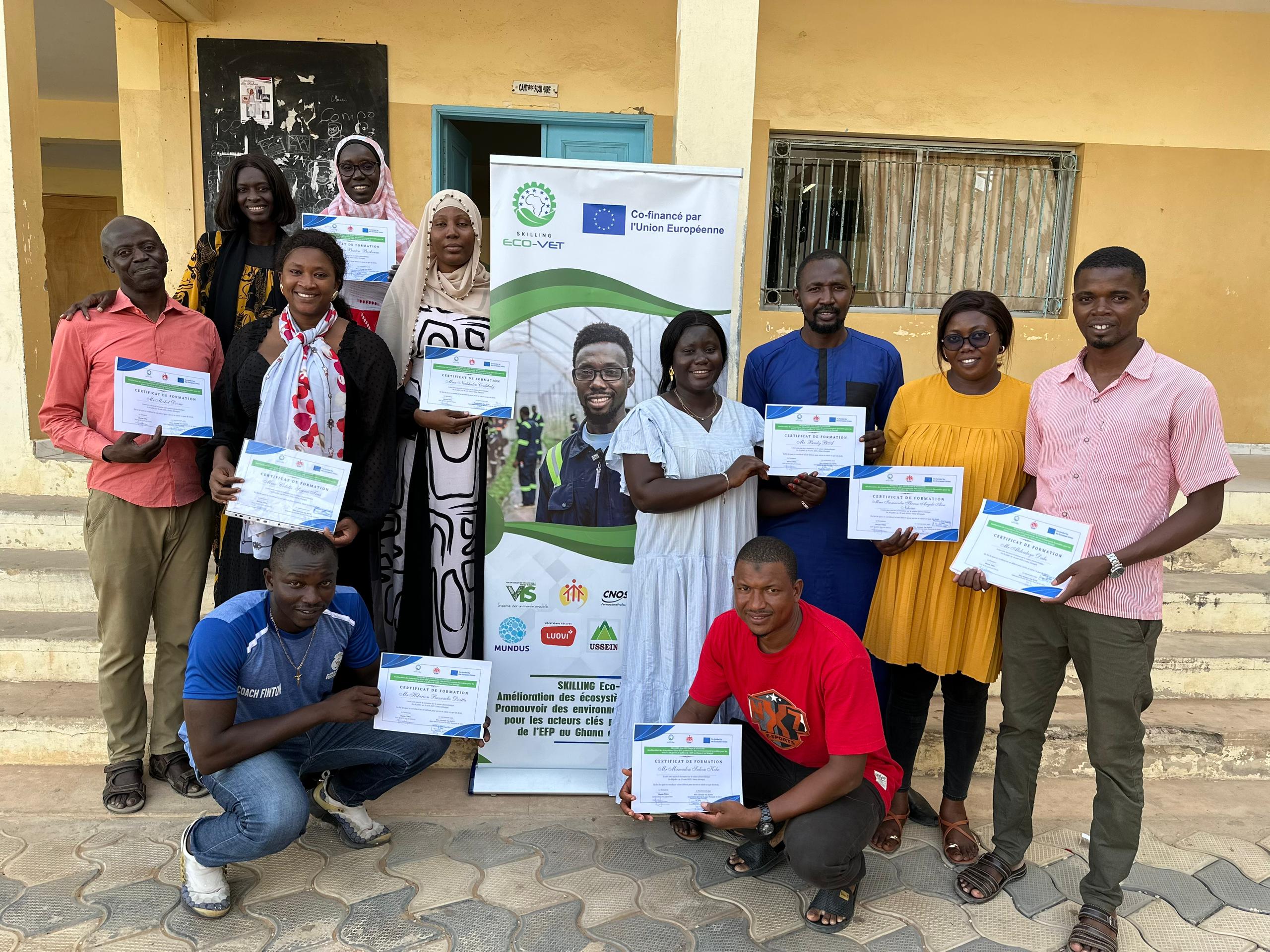
The energy transition in West Africa is strongly focused on the promotion and deployment of renewable energies, with solar energy at the heart of this dynamic. It is within this crucial context that the training module on Renewable Energies (Photovoltaic Solar) was organized by the Saint François de Sales Association for all electricity instructors at Don Bosco vocational training centers.
This training is part of the Skilling Eco-VET project, co-financed by the European Union, which aims to improve enabling environments for key actors in both private and public vocational education and training in Ghana and Senegal
OBJECTIVES AND PARTICIPANTS
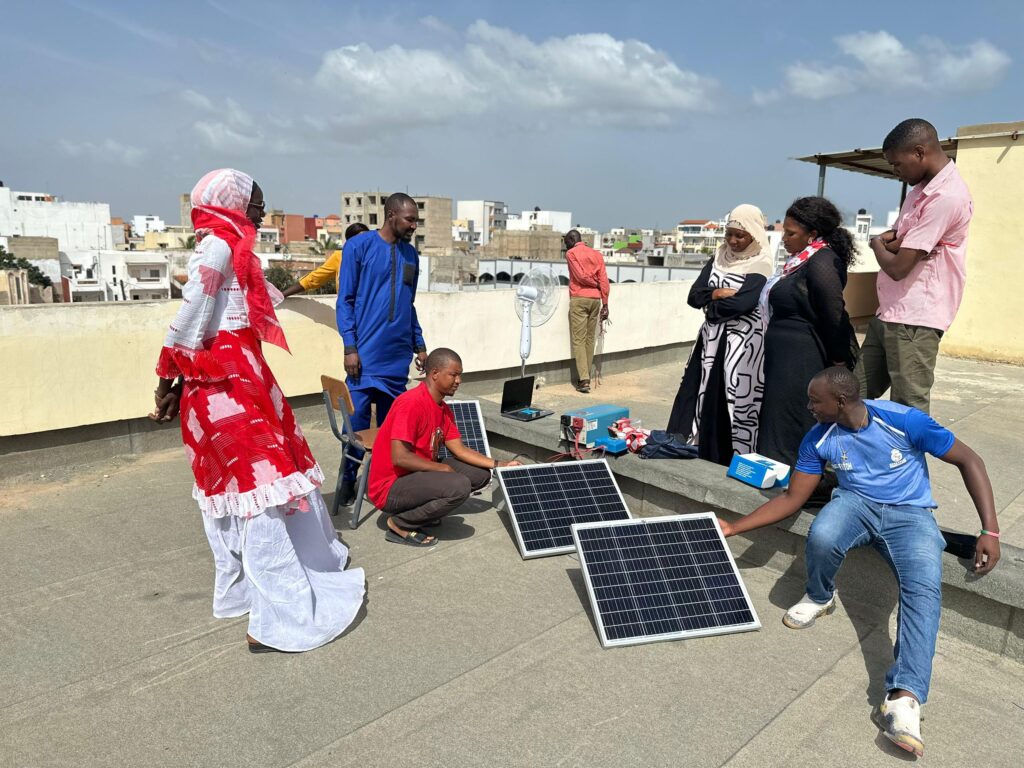
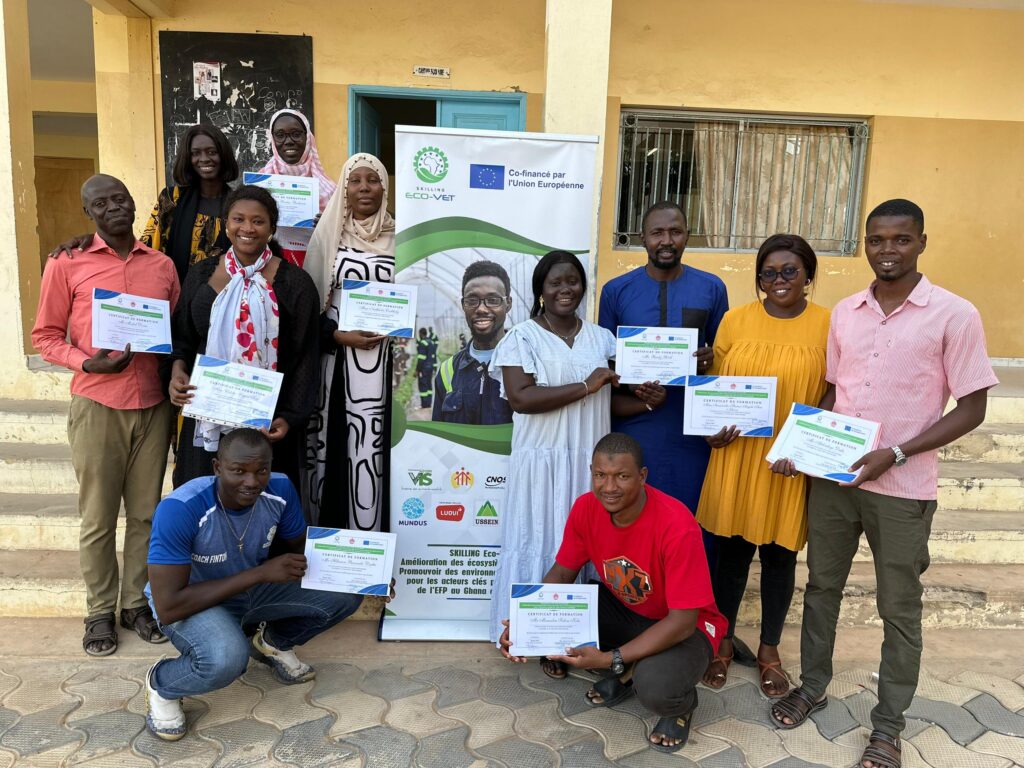
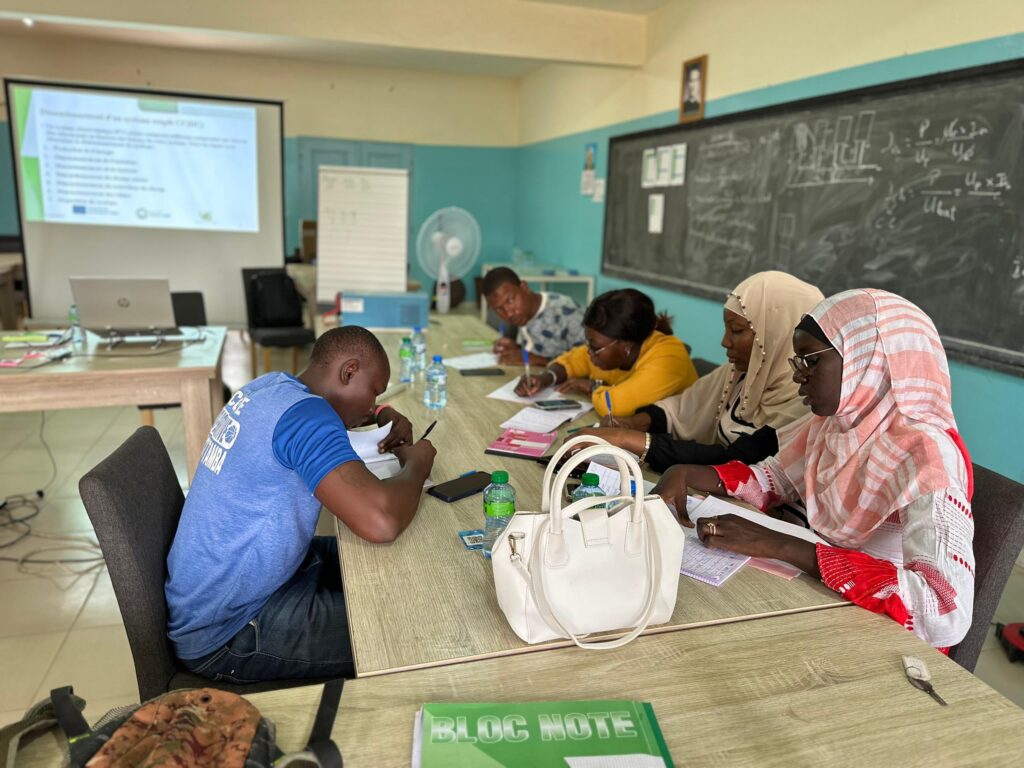
The training, held from 28 July to 1 August 2025 at Don Bosco Dakar, aimed primarily to equip instructors with the technical and practical skills necessary to teach the installation, sizing, and maintenance of photovoltaic systems suitable for the local context. More broadly, it sought to strengthen knowledge, skills, and resources for effectively teaching renewable energy. This initiative also contributes to reducing dependency on fossil fuels by promoting the large-scale deployment of solar energy to lower CO2 emissions.
Ten participants attended the training, mainly instructors in electricity and electrotechnics. Notably, 40% of participants were women, reflecting a strong emphasis on inclusion.
KEY THEMES
The sessions covered a range of essential topics for the photovoltaic solar sector:
- Introduction to renewable energies and the strategic role of solar power in Africa.
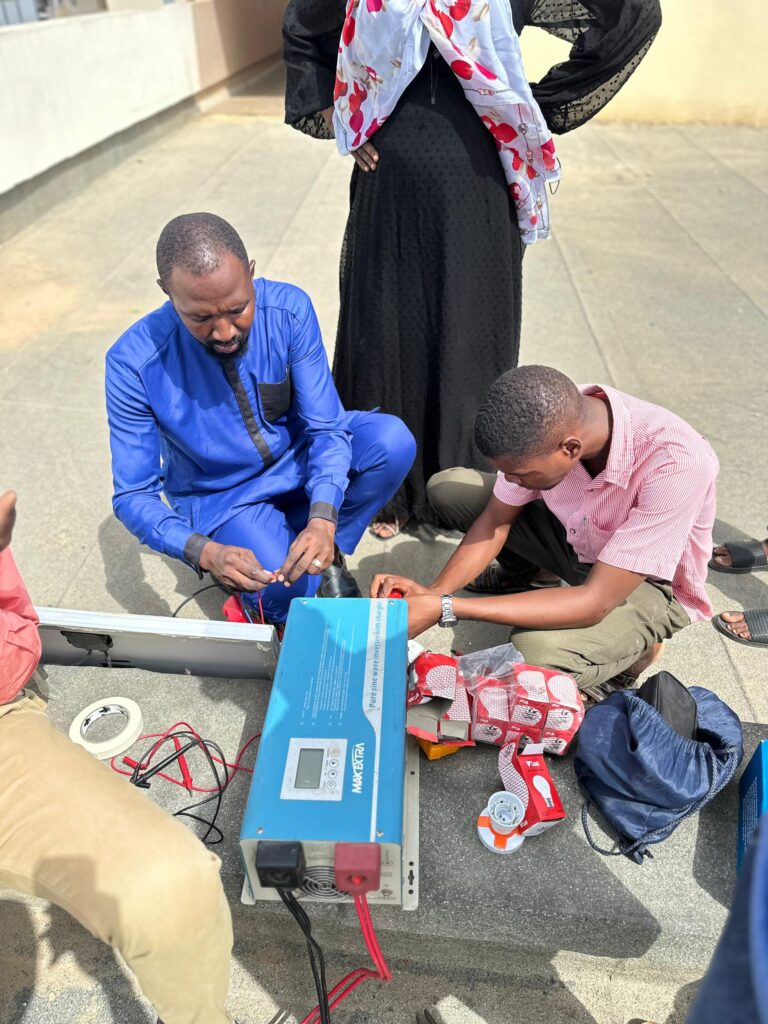
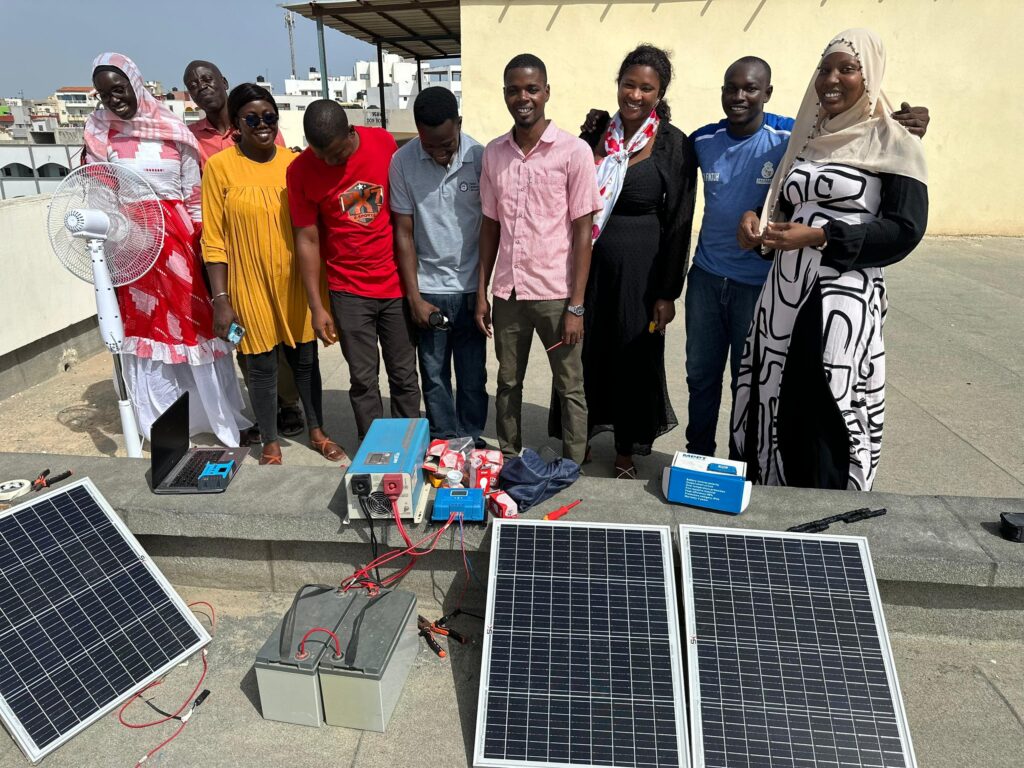
- In-depth study of photovoltaic system components (panels, charge controllers, batteries, inverters).
- Techniques for sizing and wiring solar installations.
- Safety standards and best installation practices.
- Maintenance and fault diagnosis.
- Exploration of employment and entrepreneurship opportunities in the sector.
The workshop evaluation was extremely positive, with 71.4% of participants rating the training as very useful. Practical sessions on solar panel installation were particularly appreciated. The training significantly improved participants’ skills in this field.
This training not only enhanced participants’ photovoltaic solar skills but also highlighted the need for a strategic approach to structuring the sector. The project directly contributes to promoting clean, accessible, and sustainable energy. Feedback indicates strong interest in continuing with advanced modules, underscoring the instructors’ commitment to becoming drivers of this energy transition in the region.

 English
  French