
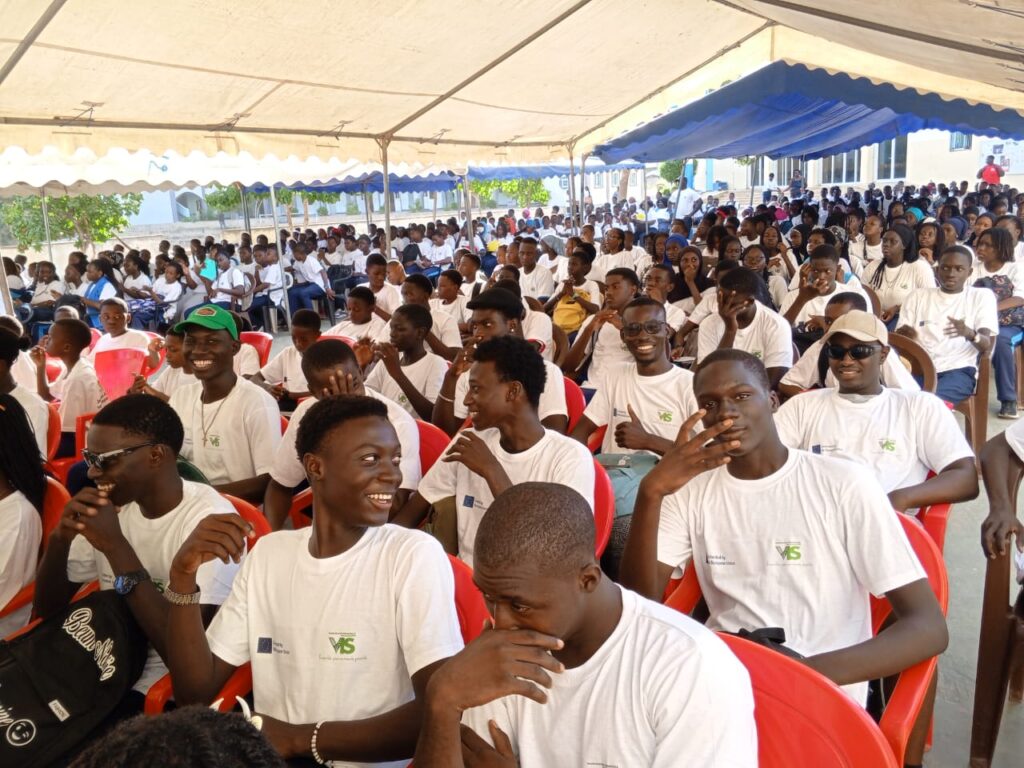
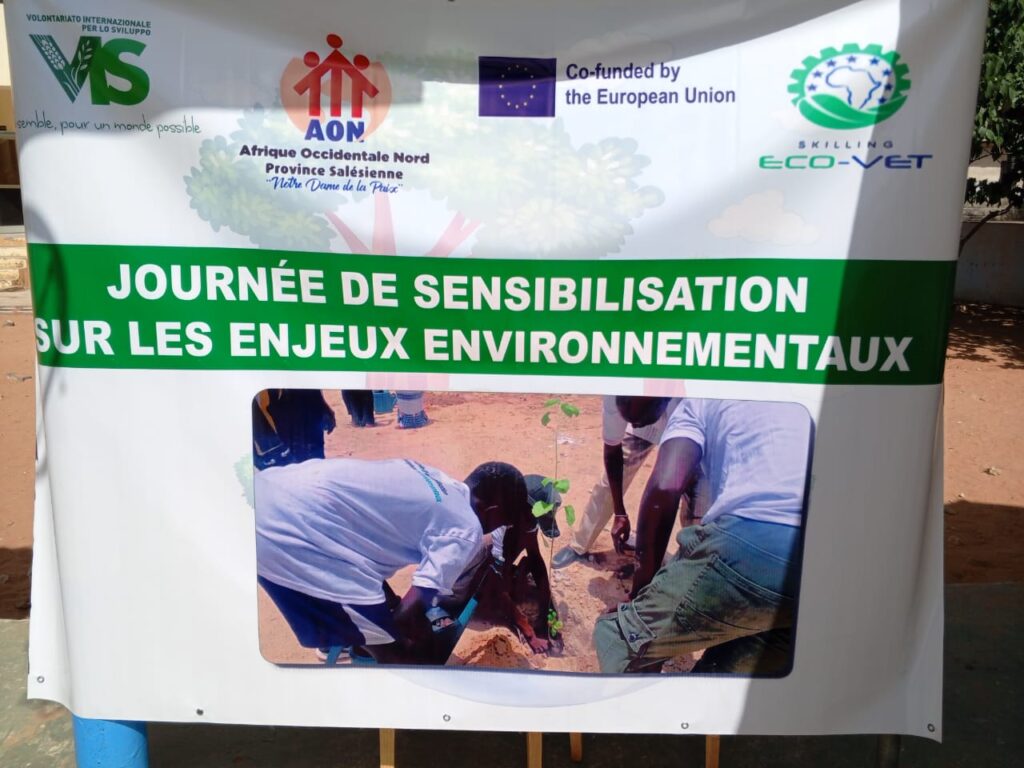
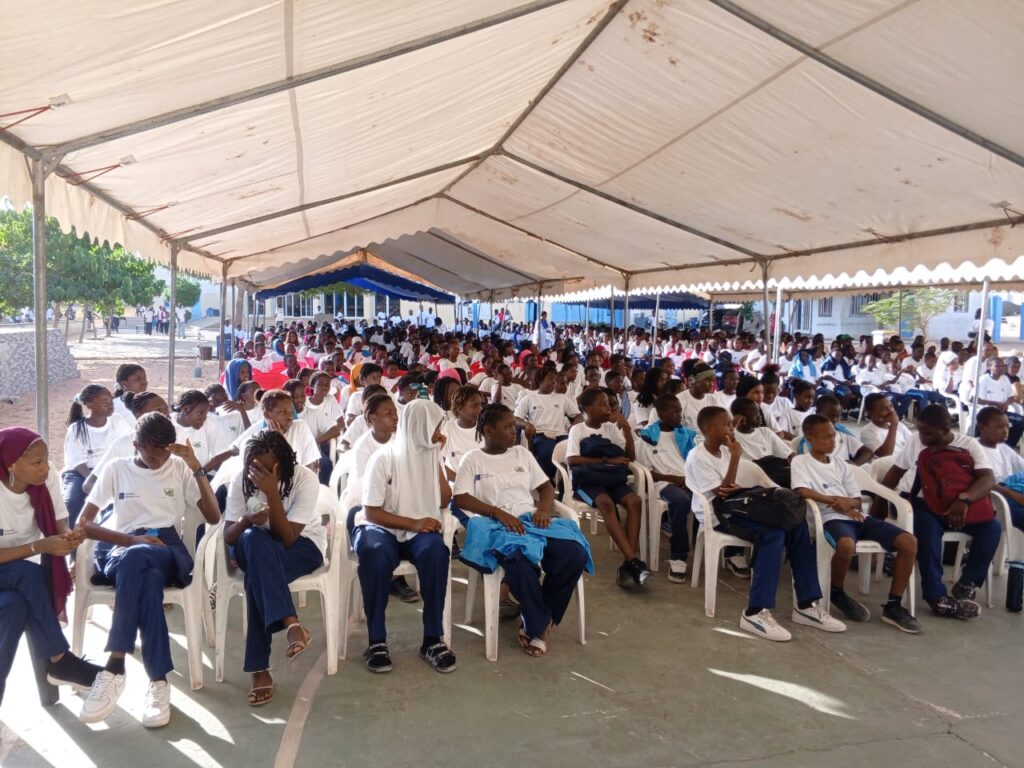
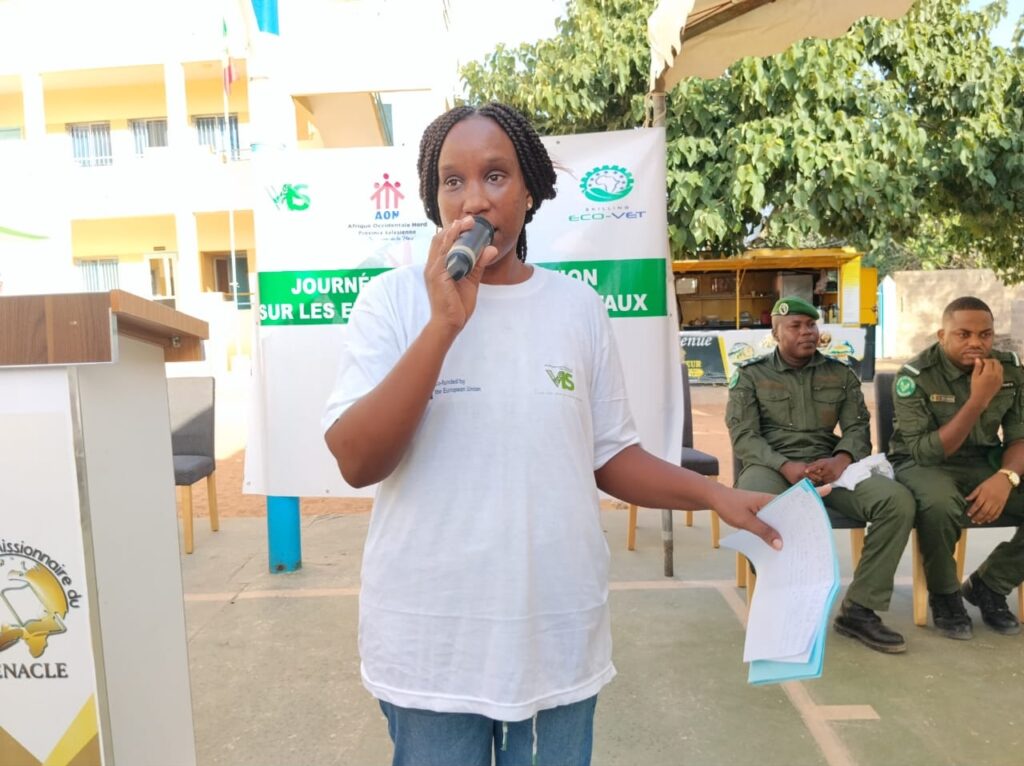
Facing current climate challenges—degradation of arable land, food insecurity, coastal erosion, and loss of human lives—changing consumption habits and behaviors is crucial. In line with its environmental policy, the Saint François de Sales Association organized an Environmental Awareness Day at the Don Bosco Center in Dakar, in collaboration with VIS. The event, co-financed by the European Union and the Skilling Eco-VET project, took place on 31 October 2025 and brought together both students from Don Bosco College and learners from the vocational training center in Dakar. More than 700 school students and nearly 60 vocational trainees participated, with notable contributions from three representatives of the Senegalese Water and Forestry Service.
The day began with a series of sessions led by the Water and Forestry team, covering the following key themes:
1. Polluting Sectors
The sectors identified as the largest greenhouse gas emitters include:
- Transport: Use of petroleum-derived fuels (gasoline, diesel, kerosene).
- Energy: High electricity consumption generating significant greenhouse gas emissions.
- Industry: Large factories (cement, steel, agri-food).
- Agriculture: Use of pesticides and agricultural machinery.
- Deforestation: Cutting forests releases stored carbon dioxide, exacerbating climate change.
- Overconsumption: The need to reduce our carbon footprint in daily actions.
2. Eco-responsible Solutions and Actions
To mitigate these causes, students were encouraged to adopt responsible behaviors, including:
- Transport: Favor public transportation such as the Regional Express Train (TER) or the 100% electric Bus Rapid Transit (BRT).
- Energy: Promote the use of photovoltaic renewable energy.
- Agriculture: Prioritize organic farming and the use of biopesticides.
- Improving the Living Environment: Use recycling bins and create a “green brigade” within the school to maintain the school environment.
3. The Importance of Trees in Urban Areas
The project for restoring the west coast of Dakar through “green islets” was presented, using Filao (Casuarina equisetifolia) to stabilize sand dunes and combat sea encroachment.
4. Green Jobs
To train the eco-citizens of tomorrow, several environmentally focused career paths were introduced:
- Renewable Energy Specialists (installation of photovoltaic solar panels).
- Plastic and Electronic Waste Recycling Technicians.
- Landscape Designers, Nursery Workers, Horticulturists.
- Eco-construction Technicians (using ecological materials such as clay bricks).
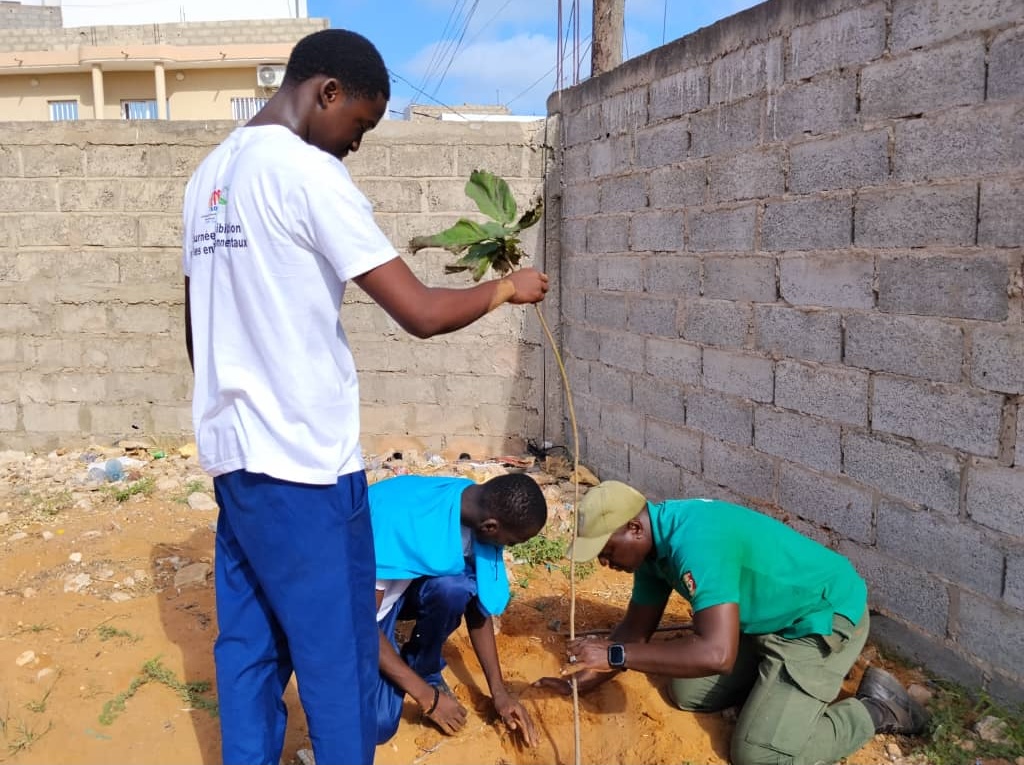
The day concluded with a practical activity: the planting of 35 saplings of various species (Cordia sebestena, Peltophorum ferrugineum, Terminalia mentalis, Albizia lebbeck, Gmelina arborea) with the students. For many, it was their first time planting a tree, giving them hands-on experience in proper reforestation techniques.
Through this day, students and trainees gained a deeper awareness of the importance of trees and the urgent need to combat climate change. The event confirmed that environmental education is essential for shaping the responsible eco-citizens of tomorrow.

 English
  French